Choosing an online poker site in the United States is a little like choosing a table in a live room. You want a game that suits your bankroll, opponents worth facing, and a dealer you can trust. The difference is that online, you cannot glance across the felt or ask the floor manager a question before you sit down. You need to do your homework first.
I have learned not to be dazzled by a giant welcome bonus or a lobby packed with flashing graphics. Those things can be fun, but they do not tell you whether a site is legal where you live, whether payouts arrive on time, or whether the games are run fairly. Here is the checklist I use when evaluating a poker site for players in the United States—before I deposit a dollar or play a hand.
Start With the Rules in Your State
There is no single set of online poker rules that applies uniformly across the entire country. Online gambling laws differ from state to state, and the options available to you can depend on your location. A site that is licensed to offer real-money poker in one state may not be authorized to do so in another.
So I begin with the least glamorous part of the process: checking the rules. Look for information from your state’s gaming regulator, and confirm that the poker operator is approved to serve players where you are physically located. Do not assume that a site is legal simply because it appears in a search result or accepts your registration details.
Some platforms offer free-to-play games, sweepstakes-style games, or other formats that operate under different rules from conventional real-money poker. Read the terms carefully and understand what kind of product you are using. If the site’s explanation is vague, or you cannot identify who regulates it, that is a reason to pause—not a challenge to beat with a clever bluff.
Location checks may also be part of the process. Licensed operators can use geolocation tools to verify that players are inside an authorized area. If your location cannot be verified, do not try to work around the restriction. Contact support and ask what is happening. A trustworthy operator will explain its requirements rather than encouraging you to bypass them.
Look for Licensing and Clear Ownership
Once I know a site may legally serve players in my state, I look for the name of the company operating it and the regulator overseeing it. This information should be easy to find, usually in the website footer, its terms and conditions, or a dedicated licensing page.
Check that the details are specific. A serious operator should identify its legal entity, explain the rules that apply to the account, and provide ways to contact customer support. If the site hides its ownership behind a maze of vague company names, that is not exactly the kind of mystery I want at the table.
Licensing is not a magic guarantee that every experience will be perfect. It does, however, provide a framework for oversight and accountability. It also gives you somewhere to look if you have a dispute that the operator’s support team cannot resolve. Make sure the license information applies to the actual poker product and the state you are in, not merely to a separate company or unrelated service.
Check How the Games Are Protected
Poker involves uncertainty by design. You can make the right decision and still lose a pot to a two-outer on the river. That is part of the game. What should not be uncertain is whether the software is designed to deal cards fairly and protect players’ accounts.
Look for clear explanations of how the operator tests or audits its games, what security measures it uses, and how it handles suspicious activity. Reputable sites commonly describe measures such as encryption, account verification, and monitoring for prohibited behavior. The exact setup may vary, but the information should be understandable rather than buried beneath technical fog.
Also check whether the operator has rules against collusion, bots, and account sharing. These practices can undermine the game for everyone at the table. A site should explain how players can report suspicious behavior and what the operator may do when it investigates. No platform can promise that bad actors will never appear, but it should take the problem seriously and have a process for dealing with it.
Before depositing, spend a few minutes reading the security and fair-play sections. If the site makes bold claims without explaining anything, treat the claims as marketing—not proof. A trustworthy poker room should be willing to show you how it protects the game.
Read the Deposit and Withdrawal Rules
Depositing is usually the easy part. Withdrawals are where a site’s customer service earns its keep. Before signing up, find out which payment methods are available in your state, what fees may apply, and how long deposits and withdrawals typically take.
Pay special attention to the conditions attached to bonuses. A welcome offer may require you to earn a certain amount of rake or meet other play-through requirements before you can withdraw bonus funds. The headline number is only one piece of the deal. Read the full terms, including expiry dates, eligible games, and any restrictions on cashing out.
I also check whether the name on the payment method must match the name on the poker account. That is a common security requirement, and it can help prevent payment problems later. Use payment options listed directly by the operator, and avoid sending money through informal arrangements or to an individual who claims to represent the site.
For your first transaction, consider starting small. A modest deposit lets you check that the cashier works as expected without putting a large balance at risk. If you later make a withdrawal, keep records of the request and any communication with support. It is not paranoia; it is simply good bankroll management off the felt.
Test Customer Support Before You Need It
A site can look polished and still be frustrating when something goes wrong. Before putting money in, I like to test customer support with a straightforward question about state availability, a payment method, or a bonus condition.
Check which contact options are offered—such as live chat, email, or phone—and whether support hours are clearly stated. Then notice the quality of the answer. Did the representative respond directly? Were the details consistent with the published terms? Or did you receive a copy-and-paste reply that somehow answered everything except your question?
You do not need a support team to become your new best friend. You do need to know how to reach a real person if a deposit is delayed, an account is locked, or a withdrawal needs review. Keep screenshots or copies of important conversations, especially if they concern money or account access.
Choose Games That Fit Your Bankroll
A trusted site should give you enough information to find games that match your experience and budget. Browse the lobby before depositing, if possible. Look at the available formats, stakes, tournament schedules, and traffic at the times you normally play.
If you are new to online poker, start with low stakes or free games while you learn the software. Online hands move quickly, and it is easy to lose track of the pace when several tables are open. There is no prize for sitting in a game that makes you uncomfortable. The best poker decision is sometimes choosing a smaller buy-in—or deciding tonight is a study night instead.
Pay attention to the details of each game. Check the blinds, buy-in range, tournament entry fee, and any table rules before joining. A beginner who intends to play a relaxed cash game does not want to discover halfway through registration that the tournament has a structure they do not understand.
It is also worth considering whether the site offers tools such as hand histories, responsible play limits, or clear account statements. These can help you review your decisions and understand your activity. I find hand histories especially useful: they let you look back at a memorable pot with a cooler head, instead of insisting that the river card was personally out to get you.
Evaluate the User Experience, Not Just the Lobby
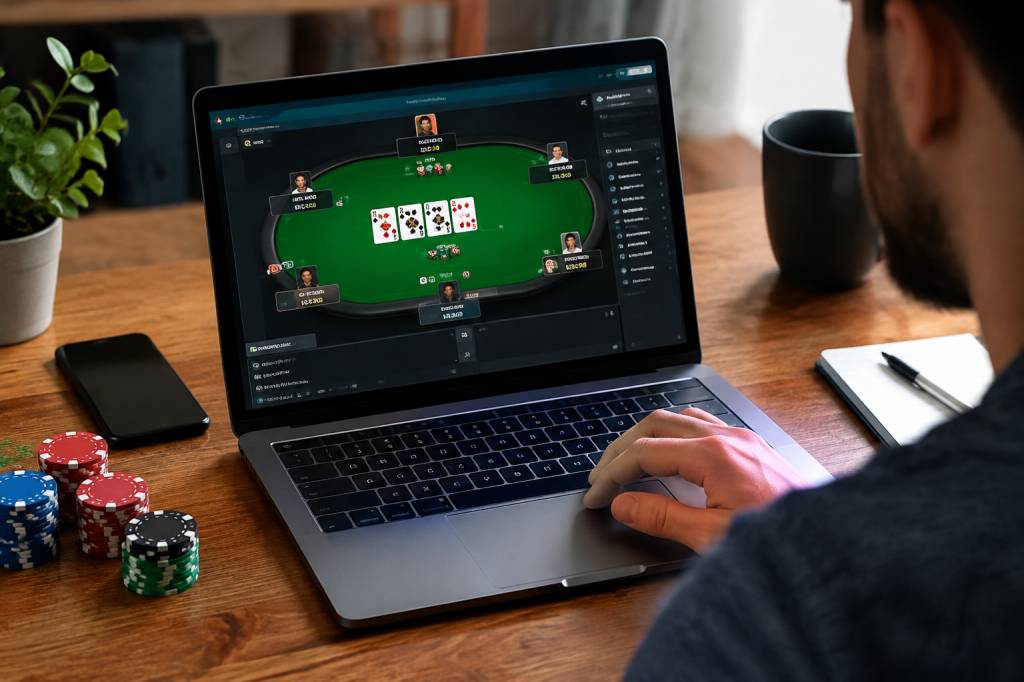
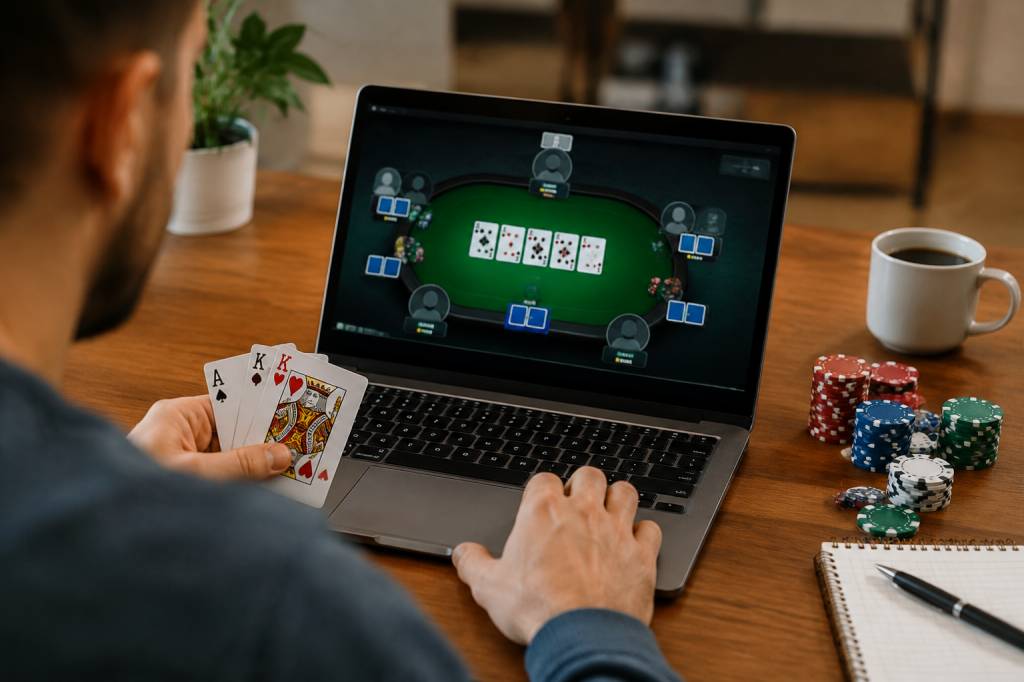
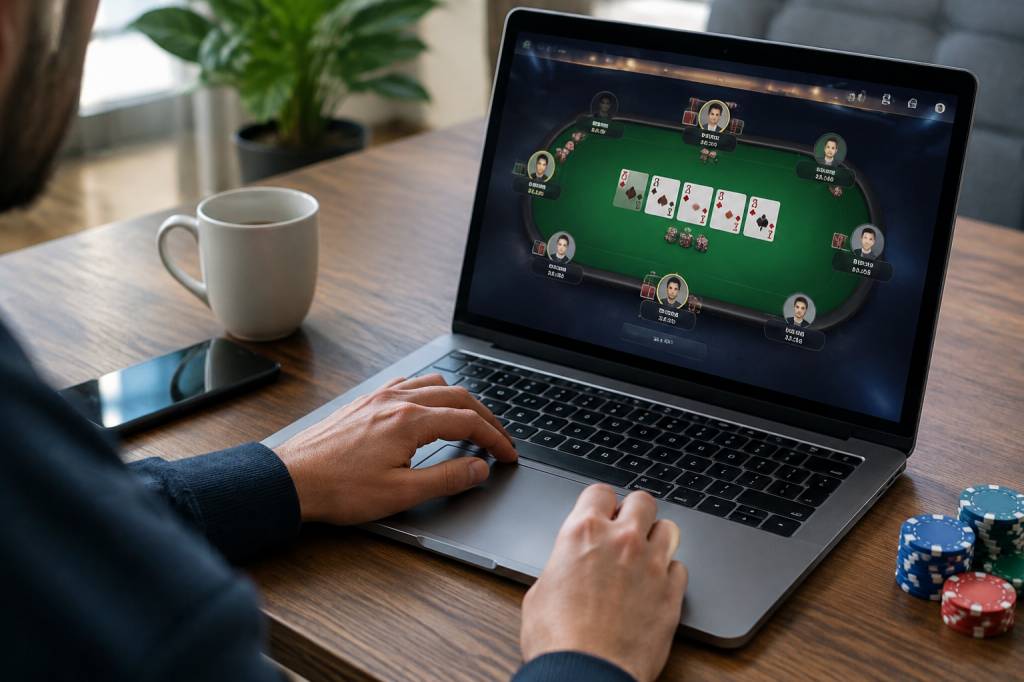
Good software should make it easy to understand what is happening. The table interface should display your cards, the pot, the action, and the stakes clearly. Menus should be straightforward, and the cashier should be easy to locate. Flashy animations are optional; knowing whether you are calling or raising is not.
If the operator offers a mobile app, check whether it is available through a legitimate app store or linked from the company’s official website. Read the privacy permissions and avoid downloading software from an unfamiliar source. On desktop or mobile, use a unique password and enable additional account security features if they are available.
Try the software with play-money tables or a low-stakes game before building a large balance. Notice whether the connection is stable and whether the controls work as you expect. A brief test can reveal practical problems that a glossy homepage will never mention.
Separate Useful Reviews From the Hype
Player reviews can offer clues about payout delays, software issues, or support experiences, but they need a careful read. One angry post after a bad beat is not a full investigation. On the other hand, a repeated pattern of similar complaints about blocked withdrawals or unexplained account closures deserves attention.
Look for recent feedback from multiple sources, and compare it with the operator’s published policies. Reviews that read like advertisements, make sweeping promises, or provide no specifics may not be useful. Be particularly wary of anyone guaranteeing winnings or claiming that a particular poker site can make you profitable. No legitimate room can promise that your next tournament will be a deep run.
When comparing options, focus on the factors that matter to your own play: legal availability, security, payment rules, game selection, support, and responsible gambling features. A room with the biggest bonus is not automatically the best room for you. A smaller promotion with clear terms can be far more appealing than a mountain of bonus dollars you cannot realistically unlock.
Set Limits Before Your First Hand
Trustworthy play is not only about trusting the operator. It is also about setting boundaries for yourself. Decide how much you can afford to spend before you sit down, and keep poker funds separate from money needed for rent, bills, food, or other essentials. Never treat gambling as a way to solve a financial problem.
Look for tools that let you set deposit, loss, or session limits, take a break, or close your account. Use them before emotions get involved. A losing session can make even a disciplined player want to chase losses; a limit set in advance is much easier to respect than a promise made after a rough river.
If playing stops feeling enjoyable or starts affecting your finances, relationships, sleep, or work, take a break and reach out for support. Responsible gambling resources may be available through the operator and through organizations in your state. Asking for help is not a sign of weakness. It is a decision that protects your life outside the game—the one that matters more than any pot.
My Quick Checklist Before I Sign Up
Before creating an account or making a deposit, I run through a final set of questions:
-
Is the poker product legally available to players in my state, and can I verify its regulatory status?
-
Can I identify the operator, its ownership, and a reliable way to contact customer support?
-
Does the site explain how it protects accounts and handles cheating, collusion, or suspicious activity?
-
Are deposit, withdrawal, bonus, and identity-verification rules easy to find and understand?
-
Does the game selection fit my experience, schedule, and bankroll?
-
Can I set limits or take a break if I need to?
-
Have I tested the software and support before committing more than I can comfortably afford?
Picking a poker site is not as thrilling as flopping a set in a crowded pot, but it is a decision that shapes every session afterward. Take the time to verify the rules, read the fine print, and test the experience with a small stake. When a site is transparent about its terms, careful with your account, and suited to your budget, you can focus on the part you came for: making good decisions, enjoying the game, and remembering that even the cleverest bluff cannot control the river.