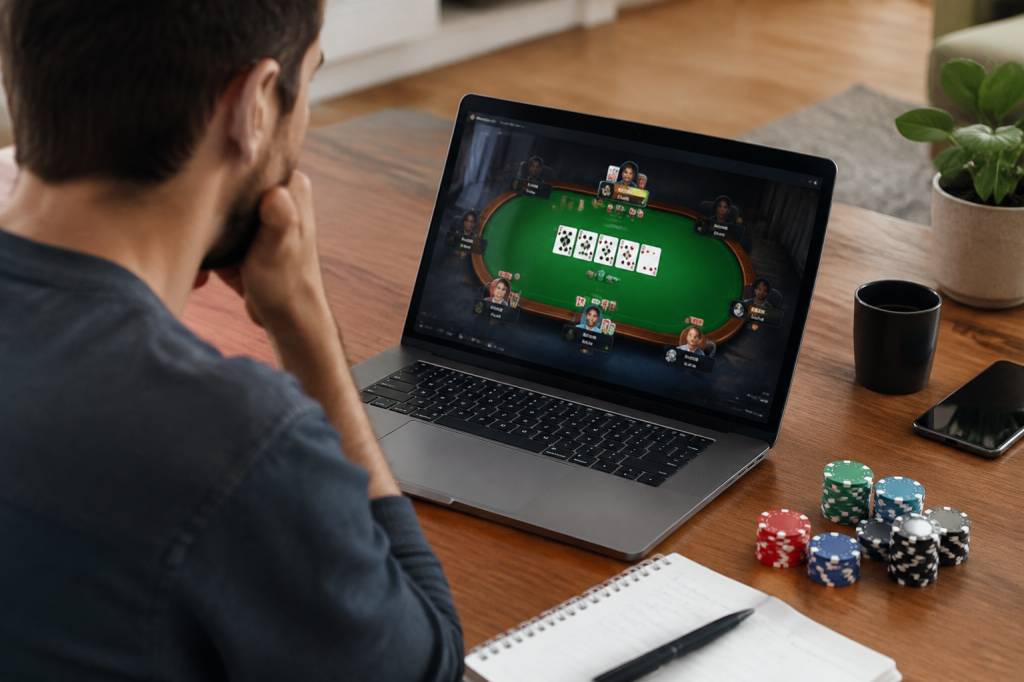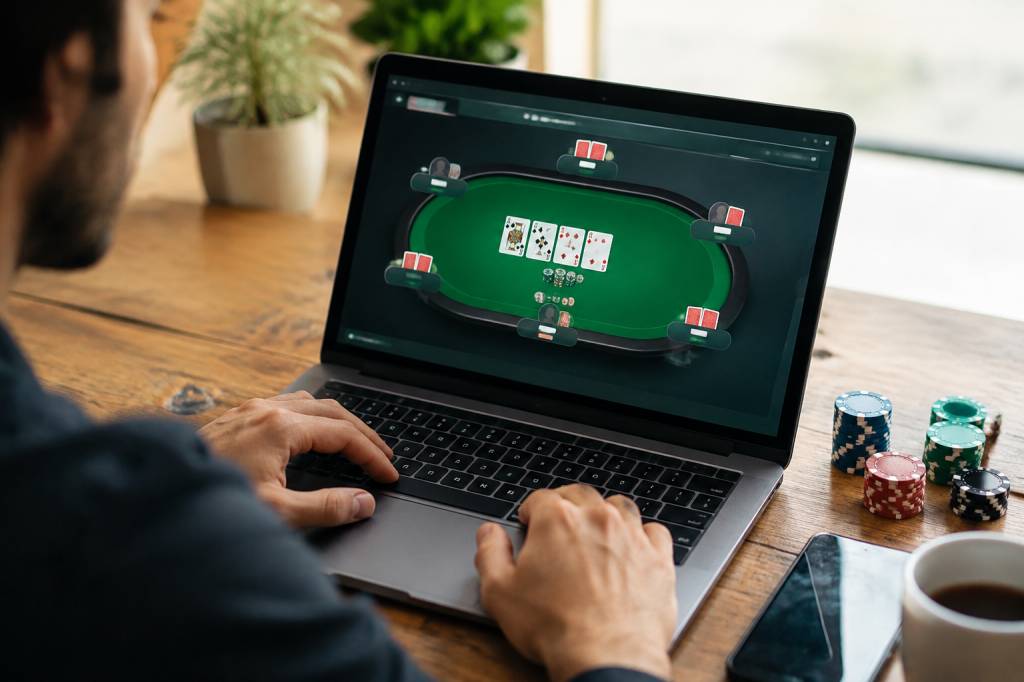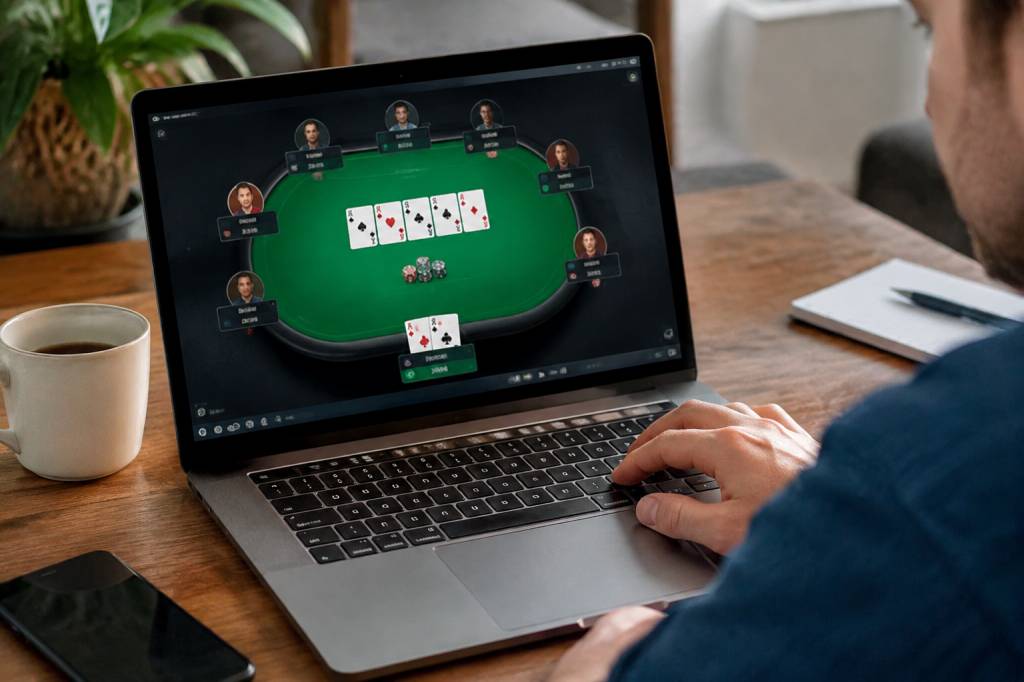
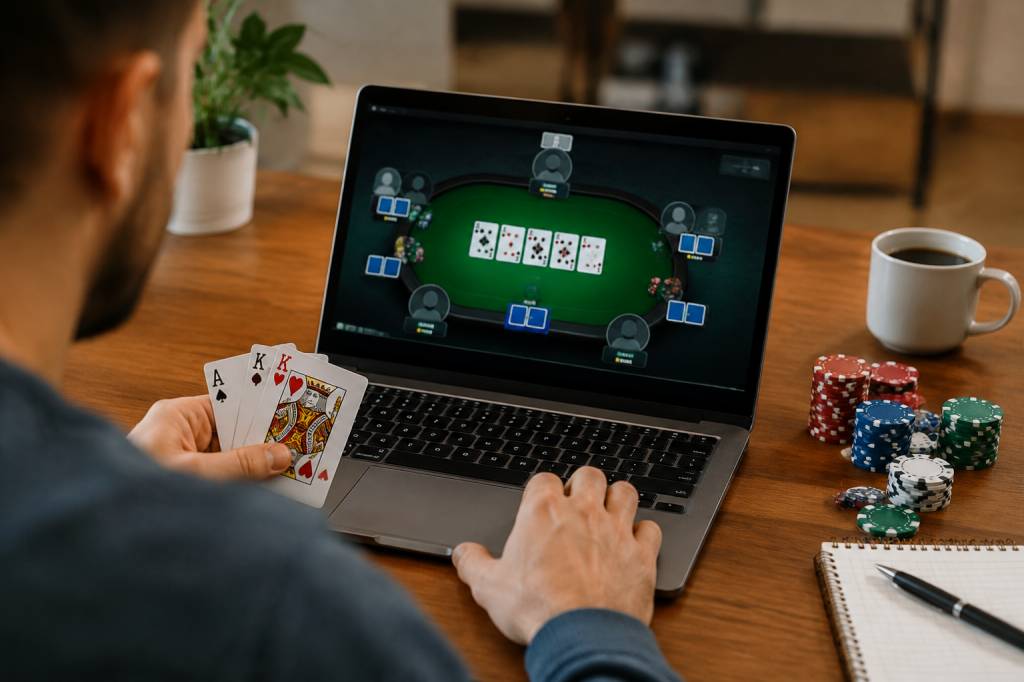
Online poker for money has a particular kind of tension: the cards arrive in seconds, the table never needs a coffee break, and one confident-looking opponent may be bluffing with absolutely nothing. The good news is that you do not need a dramatic poker face to get started. You need to understand the rules, choose a suitable game, and make decisions you can live with after the hand is over.
This guide focuses on the basics of playing online poker for real money, using Texas Hold’em as the main example. You will learn how a hand works, what to look for in a poker site, and how to build sensible habits. Poker involves risk, and no strategy can guarantee a profit. Treat it as entertainment, set limits before you play, and never wager money you need for everyday expenses.
Choose a game and a legal, trustworthy site
Before you deposit, check that online poker is legal where you live and that the operator is licensed to serve players in your jurisdiction. Rules differ from place to place. A familiar logo or polished website is not a substitute for checking the licence, the terms, and the available player protections.
Look for clear information about deposits, withdrawals, fees, identity checks, and responsible gambling tools. A reputable operator should explain how to set deposit or session limits and how to take a break or close an account. Read the bonus terms too. A generous-looking offer may come with play-through requirements that are less generous than the headline suggests.
For your first games, choose a format that suits your comfort level:
-
Cash games: You join with a set amount of chips, and each chip represents real money. You can usually leave between hands. Stakes stay consistent, making it easier to control how much you put at risk.
-
Tournaments: You pay an entry fee, receive tournament chips, and play until you are eliminated or win. The prize pool is generally awarded to the top finishers. A small entry fee can still buy a long session, but there is no promise of a return.
-
Sit-and-go games: These small tournaments begin when enough players have registered. They can be a straightforward way to try tournament poker without committing to a large event.
Start at the lowest stakes available. The goal of a first session is not to fund a yacht; it is to learn the interface, the pace, and the decisions involved without making one mistake unusually expensive.
How Texas Hold’em works
In Texas Hold’em, each player receives two private cards, known as hole cards. Five community cards are dealt face up in the middle of the table. Your best five-card hand is made from any combination of your two private cards and the five community cards. You can use both hole cards, one, or neither.
Each hand begins with two forced bets called the small blind and big blind. The players sitting immediately to the left of the dealer button post them. The button moves one seat clockwise after each hand, so everyone takes a turn paying the blinds.
The action then moves through four betting rounds:
-
Pre-flop: Each player receives two hole cards and decides whether to fold, call the big blind, or raise.
-
The flop: Three community cards are dealt. A new betting round begins.
-
The turn: A fourth community card is dealt, followed by another round of betting.
-
The river: The fifth and final community card appears. After the last betting round, any remaining players reveal their cards at showdown.
If everyone but one player folds, that player wins the pot without showing their cards. If more than one player remains after the final betting round, the best five-card hand wins. That is the formal version. In practice, a well-timed fold can be just as satisfying as a flashy showdown, especially when it saves you from paying for a bad hunch.
Know the hand rankings
Hand rankings are the same in most standard poker games. From strongest to weakest, they are:
-
Royal flush: A, K, Q, J, and 10 of the same suit.
-
Straight flush: Five consecutive cards of the same suit.
-
Four of a kind: Four cards of the same rank.
-
Full house: Three of a kind and a pair.
-
Flush: Five cards of the same suit, not in sequence.
-
Straight: Five consecutive cards of different or matching suits.
-
Three of a kind: Three cards of the same rank.
-
Two pair: Two different pairs.
-
One pair: Two cards of the same rank.
-
High card: When no player has a qualifying combination, the highest card plays.
Suits do not have a ranking in standard Hold’em. If two players have the same hand type, the highest relevant cards decide the winner; sometimes the pot is split. A common beginner trap is to admire a pair without noticing that the board has created a possible straight or flush for an opponent. Always consider the full five-card hand, not just the cards that caught your eye.
Make your first decisions count
The first strategic choice is whether to play your starting cards. You do not need to enter every pot. In fact, folding weak hands before the flop is one of the simplest ways to avoid difficult, expensive situations later.
Strong starting hands include high pairs such as aces, kings, and queens, as well as strong combinations such as ace-king. Smaller pairs and suited connectors—cards close in rank and of the same suit—can sometimes be playable, especially from a late position. But they are not magic tickets. Their value depends on the stakes, the players still to act, and the amount required to call.
Position matters because it determines when you act. Players acting later have more information: they have seen what earlier players did before making their own choice. From an early position, take a more selective approach. From a late position, you can sometimes play a wider range, particularly when everyone before you has folded. This is not permission to raise every hand from the button; it is a reminder that the same cards can be more useful in one seat than another.
Imagine you hold ace-jack in a low-stakes cash game. If you are first to act and several opponents remain behind you, raising may invite a re-raise from a stronger hand or put you in a tricky spot after the flop. If the table folds around to you in late position, that same hand may be strong enough to open with a raise. Context is part of the hand, even though it never appears on the screen.
Bet with a reason
Before you bet, ask what you are trying to achieve. Are you betting for value because you think weaker hands will call? Are you bluffing to make a better hand fold? Are you protecting a vulnerable lead? If the only answer is “I feel like it,” pause. The button does not award bonus points for confidence.
Bet sizing should relate to the pot, the board, and your opponent’s likely decisions. A bet that is too small may give a draw a cheap chance to improve. A bet that is too large can risk more money than the situation calls for. At beginner stakes, focus first on making clear, consistent decisions rather than trying to imitate complicated plays you saw in a televised tournament.
Bluffing is part of poker, but it is not compulsory. A bluff is more convincing when the cards on the board could plausibly have helped the story you are telling, and when your opponent has shown they may fold. Repeatedly bluffing players who call nearly every bet is like trying to whisper through a fire alarm: the message is unlikely to get through.
Keep your bankroll and emotions in check
Your bankroll is the money you have deliberately set aside for poker. It should be separate from rent, bills, savings, and other essential funds. Decide on a limit before you sit down and stick to it, even after a run of unlucky hands. Poker has variance: a strong decision can lose, and a poor decision can win. One result does not prove that the decision was good.
Do not chase losses by moving up to higher stakes or depositing more than planned. That is often the moment when frustration starts making decisions for you. If you feel angry, rushed, or desperate to “get even,” end the session. A short break can protect your wallet better than any clever river call.
It can help to set limits for both money and time. Use the site’s available controls where possible, and consider keeping a simple record of deposits, withdrawals, and time spent playing. If poker stops feeling like entertainment or begins affecting your finances, relationships, or wellbeing, take a break and seek support from a trusted person or a local gambling-help service.
Useful habits for online play
Online tables move quickly, and it is easy to click before thinking. Build a small routine: check your position, review the action, consider the board, and only then choose fold, call, or raise. If the platform offers a time bank, use it for genuinely difficult decisions rather than spending it on every hand.
-
Start with one table: Multiple tables can increase the pace and make it harder to notice details. Add more only if you can make decisions carefully.
-
Review key hands: After a session, look at a few memorable pots. Ask what you knew at the time, not just whether you won.
-
Watch patterns, not single moments: One unusual bet does not reveal someone’s whole strategy. Look for repeated tendencies, such as frequent calls or unusually large raises.
-
Protect your account: Use a strong, unique password and any available account security features. Never share login details.
-
Ignore “sure things”: No tip, system, or player can reliably predict every outcome. Be especially cautious of anyone promising guaranteed profits.
Common beginner mistakes to avoid
Playing too many hands is a classic. It feels active, but activity is not the same as good poker. Folding can be the most profitable decision available, even if it is not the most exciting one.
Another mistake is treating every draw as a reason to call. If you are chasing a flush or straight, consider how much it costs to continue and how likely the draw is to complete. Also consider whether completing it would actually give you the best hand. A completed draw is not automatically a winning hand if the board is paired or an opponent can make a stronger combination.
Finally, avoid judging your skill by a single session. A lucky night can flatter weak decisions, while a rough run can punish solid ones. Focus on whether you followed your plan, chose sensible starting hands, and kept to your limits. The cards will do what cards do; your decisions are the part you can work on.
Build confidence one hand at a time
Playing online poker for money is easiest to approach as a skill-based game with an unpredictable short-term result. Learn the hand rankings, understand the betting rounds, start at low stakes, and take time to think through each decision. You will still lose pots—sometimes to a remarkable river card that seems to have arrived purely to annoy you—but losing a hand is not the same as playing it badly.
Keep the stakes comfortable, use the protections available to you, and step away when the fun fades. With patience and sensible limits, you can enjoy the strategy and suspense without asking poker to become something it cannot promise: a reliable way to make money.