Starting online poker or casino games can feel a little like sitting down at a table where everyone knows the rules except you. The good news? You do not need a secret handshake, a lucky hat, or years of experience to get started. You do need a few basics: a clear understanding of the games, a sensible budget, and the patience to learn before raising the stakes.
Whether you are curious about poker, tempted by the spin of a roulette wheel, or simply wondering how online play works, this guide will help you take your first steps with confidence. Think of it as a friendly introduction—not a promise of easy wins. Luck can make an entrance, but it does not always stay for dinner.
Start with the basics: choosing where to play
Before you open a game, choose a platform carefully. Online casino and poker services differ in their game selection, payment methods, customer support, and rules. A polished homepage is nice, but it is not the same thing as a trustworthy operator.
Look for a site that is licensed to operate where you live and check that it explains its terms clearly. Licensing requirements vary by country and region, so verify the relevant regulator rather than assuming a site is permitted everywhere. You should also review the rules for deposits, withdrawals, bonuses, and account verification before putting money in.
-
Check the license: Look for information about the operator and its regulator, and confirm it through the regulator’s official website when possible.
-
Review security: Use a strong, unique password and enable extra account protection if it is offered.
-
Read the payment terms: Find out which deposit and withdrawal methods are available, along with any fees or processing times.
-
Understand bonus rules: Promotions may come with wagering requirements, game restrictions, and expiry dates. A bonus is not automatically free money.
Only use services that are legal in your location and intended for adults of the legal gambling age there. If you are unsure, check local rules before registering. A few minutes of research can save you an awkward conversation with customer support later.
Learn the games before you wager
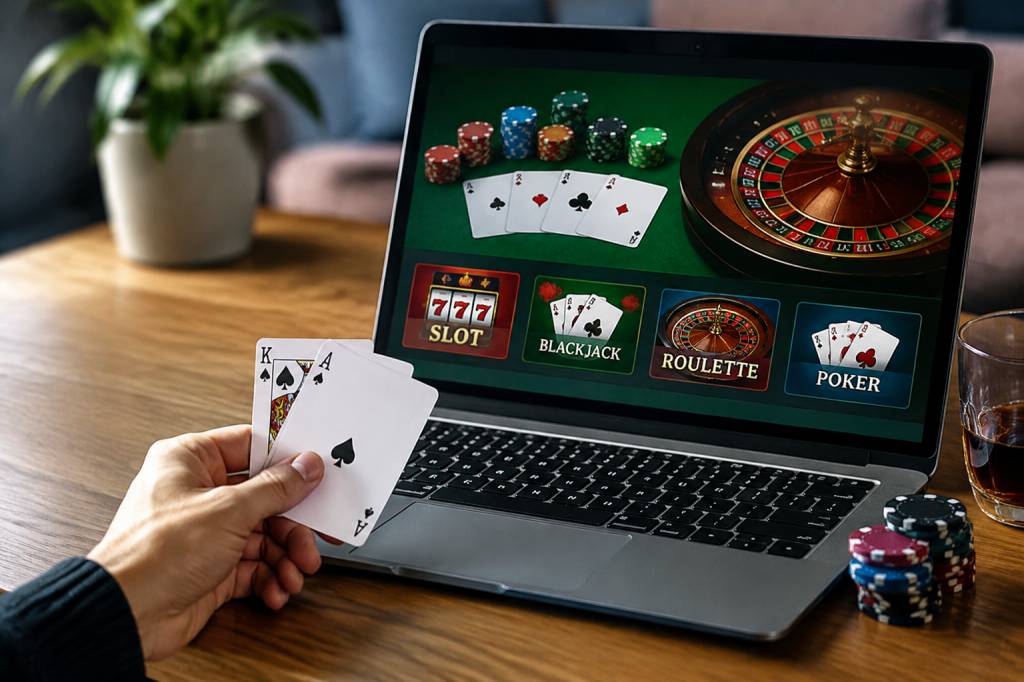
Online poker and casino games may sit side by side on the same screen, but they work in different ways. Poker is played against other people, and decisions about betting, folding, and reading the action matter. Most casino games are played against the house, with rules and odds that vary by game and format.
For beginners, the best first game is usually the one whose rules you understand—not the one with the flashiest graphics. Start with a free-play mode or a low-stakes table if available. A practice round lets you learn the controls, timing, and basic flow without paying for every small mistake.
Take time to read the game’s rules and pay attention to details such as bet limits, special features, and how a round ends. In blackjack, for example, the aim is to finish with a hand total closer to 21 than the dealer’s without going over. In roulette, you choose a number or group of numbers and place a bet before the wheel spins. The excitement is immediate; understanding what your wager actually means is even more useful.
Your first steps in online poker
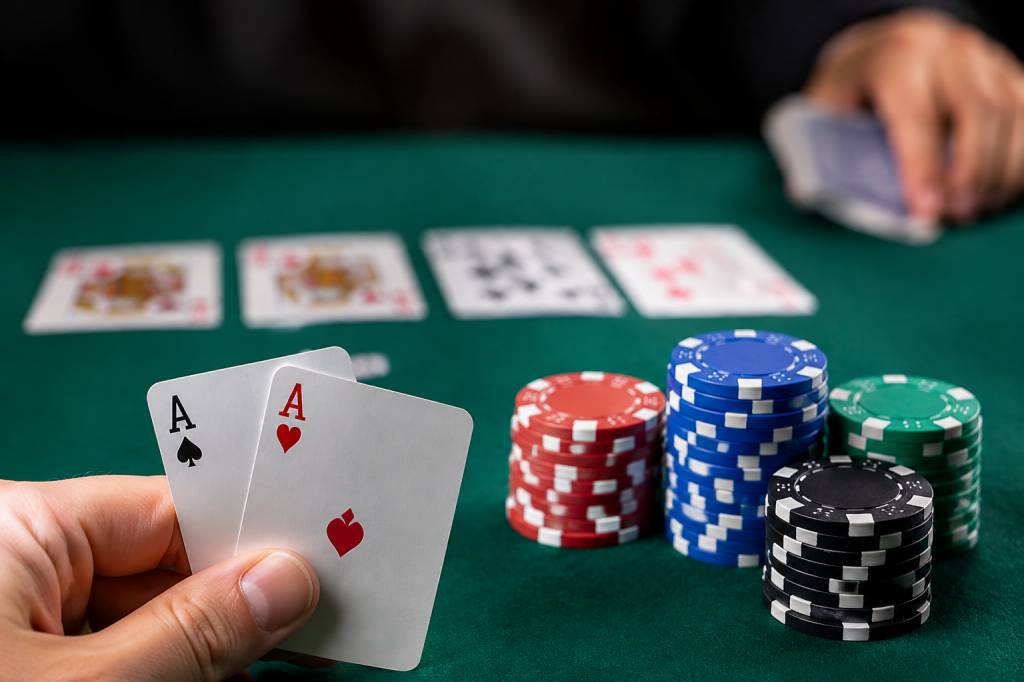
Texas Hold’em is a common starting point for new poker players. Each player receives two private cards, and five shared cards are revealed across the table. Players use the best five-card combination they can make from those cards. The aim is to win the pot by having the strongest hand at showdown or by getting everyone else to fold.
A typical hand moves through several betting rounds. You may check, call, bet, raise, or fold, depending on what has happened and the rules of the game. If you are new, do not worry about memorizing every advanced tactic. First learn the order of play, what each action does, and when it is your turn. Clicking too quickly is a classic way to discover that the “raise” button was not, in fact, a decorative feature.
Start at a table with stakes you can comfortably afford. Low-stakes games still offer real decisions, but they make early mistakes less expensive. You can also look for beginner tables, free tournaments, or play-money games, where available. These are useful for getting comfortable with the interface and the rhythm of a hand.
-
Play fewer hands at first: Folding is part of poker. You do not have to participate in every pot to be a real player.
-
Notice your position: Acting later in a betting round gives you more information about what others have done.
-
Watch the table: Pay attention to bet sizes and patterns, but avoid assuming that one move reveals exactly what another player holds.
-
Keep emotions out of the next hand: A bad beat can sting. Chasing losses with bigger bets usually makes a difficult session worse.
Imagine you have a modest hand and an opponent suddenly makes a large bet. You are not obliged to call just because you have already put chips in the pot. Ask yourself what you know, what you are guessing, and whether the call fits your plan. Sometimes the sharpest play is to let that pot go and wait for a better spot.
Getting comfortable with online casino games
Casino games are often quicker to learn than poker, though each has its own rules and pace. Slots generally involve selecting a stake and spinning the reels. Roulette asks you to choose a betting option before the wheel spins. Blackjack involves decisions about your hand, while baccarat typically offers a small set of straightforward betting choices.
Before playing, check the minimum and maximum bets and any special rules. In blackjack, for instance, tables may differ in how the dealer handles a soft 17 or whether doubling down is allowed. Those details can affect how a game plays, so do not rely on assumptions from a movie scene or a friend’s story from a very different table.
Casino games are designed with a house edge: over time, the mathematical expectation generally favours the operator. Short-term results can vary, and a lucky run is possible, but no strategy can guarantee a win. Treat the game as paid entertainment, not as a way to earn income or solve money problems.
For a first session, choose one game and learn it well rather than jumping between several unfamiliar options. Set a small limit, take your time, and stop when the session ends. If the game feels confusing or stressful, stepping away is a perfectly good decision.
Set a budget before the first bet
A budget is not exciting, but neither is realizing halfway through a session that you have spent more than intended. Decide in advance how much money you are willing to spend for entertainment. That amount should be separate from money needed for rent, food, bills, savings, or other essential expenses.
It can help to set both a deposit limit and a time limit. When either one is reached, stop. Do not increase your budget because you are losing, and do not treat a win as a reason to keep playing indefinitely. A winning streak does not make the next result predictable, just as a losing streak does not mean a win is “due.”
-
Choose a session budget you can afford to lose.
-
Set a time limit before you start and use a reminder if needed.
-
Never borrow money or use credit to continue gambling.
-
Take breaks, especially if you feel frustrated, tired, or pressured to recover losses.
Many licensed platforms provide tools such as deposit limits, time reminders, cooling-off periods, and self-exclusion. Learn where these controls are before you need them. If gambling stops feeling like entertainment or begins affecting your finances, relationships, or wellbeing, stop playing and seek support from a trusted person or a gambling-help service in your area.
Make your first session a learning session
It is tempting to measure a first session only by whether you finish ahead. That is a poor scoreboard for a beginner. A more useful measure is whether you learned the rules, stayed within your budget, and made decisions calmly.
Try a simple plan: spend a few minutes reading the rules, play a short practice round, then set a small real-money limit only if you are comfortable and legally eligible. Afterward, note what confused you and look it up before playing again. For poker, you might record a hand where you were unsure whether to call or fold. For a casino game, you might check which table rule or betting option you did not understand.
Keep your expectations realistic. You may win, lose, or finish close to where you started; none of those outcomes proves that you have mastered the game. Experience comes from learning the process, not from believing that one lucky result has revealed a winning formula.
Common beginner mistakes to avoid
New players often make the same understandable errors. The first is playing too fast. Online games move quickly, and bright animations can make a decision feel urgent. Take a breath and read the screen before confirming a bet. If you do not know what an option does, do not click it just to keep the action moving.
Another common mistake is chasing losses. After a disappointing hand or a run of unlucky spins, it can feel natural to raise the stakes and try to get back to even. But the next result is not obliged to repair the last one. Stick to the limit you chose while calm, and log out when you reach it.
Finally, be wary of claims that a system can beat every game or guarantee a profit. Poker involves skill as well as chance, but strong players still face uncertainty. Casino outcomes can also vary from one round to the next. If someone promises certain winnings, treat that claim with the same caution you would give a stranger offering to sell you a “lucky” deck in a parking lot.
Play at your own pace
Online poker and casino games can be enjoyable ways to test your decisions, learn new rules, and share a little competitive excitement. The best way to begin is with curiosity rather than pressure: choose a reputable, legally available platform, practise first, understand the game, and keep firm limits on both time and money.
You do not need to bluff like a tournament champion on day one. Learn one decision at a time, treat every wager as entertainment spending, and remember that walking away is always an option. The goal is to enjoy the game while keeping it in its proper place—fun, not a financial plan.