


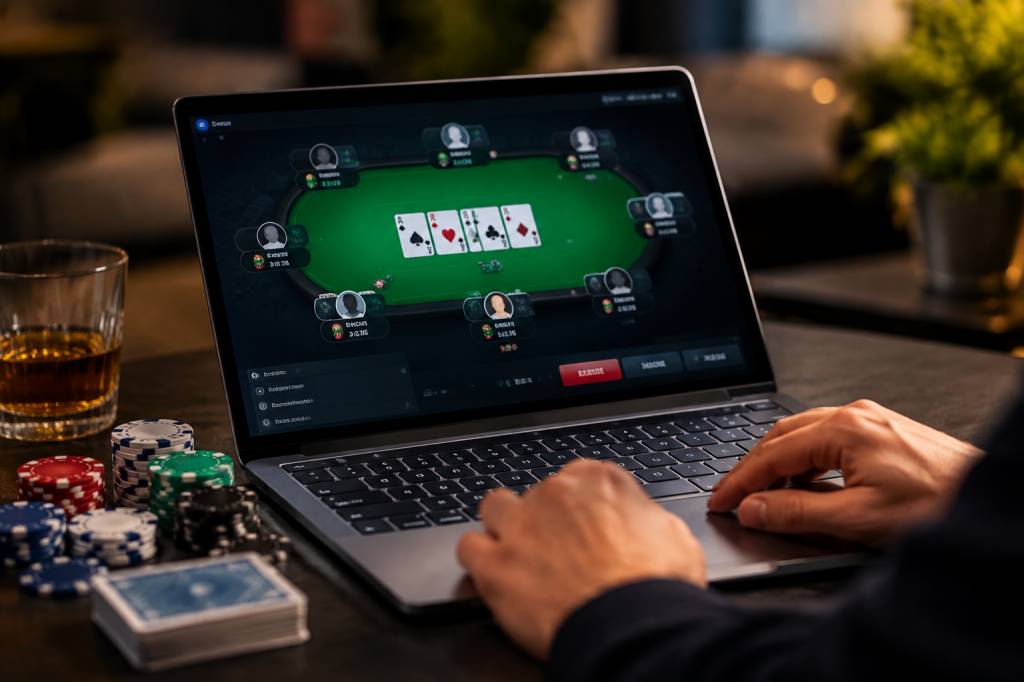
Online poker has a particular talent for making a quiet evening feel like the final table of a major tournament. One minute you are choosing a seat; the next, you are deciding whether that river card deserves a call or a very dignified fold. If you are looking at partypoker in the UK, a little preparation can make the experience more enjoyable—and help keep your decisions thoughtful rather than impulsive.
This guide covers how to get started, what to check before you play, how to choose a game, and how to make better use of your time at the tables. The aim is not to promise a winning formula. Poker does not hand those out. It is to help you approach the game with clear expectations, a sensible plan, and enough patience to survive the occasional spectacularly annoying bad beat.
Check availability before you sign up
Online poker products, promotions, and account arrangements can change. Before registering, visit the official partypoker website intended for UK customers and check that the service is currently available to you. Confirm that the operator is authorised to provide online gambling in Great Britain by checking the UK Gambling Commission’s public register. Do not rely on old forum posts, search snippets, or a link that promises a shortcut.
To play for money in Great Britain, you must be at least 18. You may also need to confirm your identity, age, address, and payment details. These checks are a normal part of regulated gambling, not an excuse to upload personal documents to an unofficial page. Use the operator’s verified website or app, and contact its official support team if you are unsure what information is required.
It is also worth checking whether the poker client works on your device, which payment methods are currently supported, and whether any fees or withdrawal conditions apply. Terms differ between operators and can change over time. A quick read now is much less frustrating than discovering a restriction when you are ready to cash out.
Create an account and secure it
If the UK service is available and you decide to register, follow the instructions on the official site. You will generally be asked to provide accurate personal details, choose account credentials, and complete any requested verification. Use a unique password that you do not use for email or other accounts. If extra account security is offered, enable it.
Before depositing, take a minute to explore the account settings. Find the sections for deposits, withdrawals, transaction history, privacy, and responsible gambling controls. Set a deposit limit that fits your budget before you begin playing. It is easier to make a calm decision at the kitchen table than to set a limit while a tournament is in its final stretch and every hand feels like destiny.
Never share your password or verification codes. Avoid logging in on public devices, and sign out when you finish. If an email or message claims to be from the operator and asks you to reveal your password, treat it with suspicion. Reach customer support using the contact details on the official website rather than links in an unexpected message.
Choose a game that fits your experience
Poker platforms can offer several formats, but the exact selection depends on what is currently available. Common options include cash games, tournaments, and fast-fold games. Each has a different pace and calls for a slightly different approach. You do not need to try everything on the first visit. Start with a format whose structure you understand.
-
Cash games: You play with chips that represent money at a table with set stakes. You can usually leave between hands, subject to the table rules. Choose stakes where the possible swings would not affect your essential spending.
-
Tournaments: Players pay an entry fee or use an eligible ticket, receive tournament chips, and compete until they are eliminated or the event ends. The prize structure, starting stack, blind levels, and late-registration rules matter, so check them before entering.
-
Fast-fold games: After folding, you are moved to another hand quickly. This creates a brisk rhythm and more hands per hour, which may be appealing—but it can also encourage careless clicking. Speed is not a strategy.
-
Play-money tables: If offered, these can help you learn the controls and hand rankings without risking cash. They are useful for practice, though players may behave differently when no real money is involved.
Look at the stakes, table size, and game variant before joining. Texas Hold’em is often the best-known starting point: each player receives two private cards and shares five community cards. If you are new, learn the hand rankings and basic betting rounds before risking money. Knowing that a flush beats a straight is more useful than discovering it after the chips are already in the middle.
Understand the table before playing
At a typical Hold’em table, the small blind and big blind are forced bets that rotate around the players. After receiving two private cards, players take turns deciding whether to fold, call, or raise. Three community cards are dealt at the flop, followed by the turn and river, with betting rounds between them. If more than one player remains at the end, the best five-card hand wins the pot.
Learn the table controls before the first hand. Check what the buttons do, how to set a bet size, and whether the client offers preset bet amounts. If you play multiple tables, begin with one. A single table gives you room to notice the action, think about your choices, and avoid the digital equivalent of trying to juggle while reading a menu.
Position matters. Players who act later in a betting round have more information about what others have done. A hand that is reasonable to play from a late position may be a poor choice from an early one. This does not mean you need to memorise a huge chart before you begin. Start by playing more cautiously from early positions and paying attention to how the betting changes as the action moves around the table.
Build a simple, steady poker approach
A useful beginner’s plan is to play fewer hands, pay attention to position, and avoid calling simply because you have already put chips into the pot. Each decision should be about what makes sense now, not about rescuing an earlier decision. Poker players sometimes call this avoiding the sunk-cost trap. The cards are unimpressed by how much you have already invested.
Before you act, consider a few questions: What hands could my opponent reasonably have? What does their betting suggest? How strong is my own hand, and what might improve it? What will I do if they raise? You will not always reach the right answer, but asking these questions is better than clicking “call” because the pot looks inviting.
Bet sizing is another area where small choices add up. A bet that is too large can put your whole session at risk; a bet that is too small may give opponents an easy chance to continue. At the start, keep your decisions straightforward and pay attention to the size of the pot. If the client displays a bet slider or suggested amounts, check the number carefully before confirming. One misplaced zero can turn a modest hand into an expensive story.
Do not confuse a dramatic hand with a good decision. If you get your money in with a strong chance to win and your opponent catches a lucky card, that is poker variance—not proof that you played badly. Equally, winning a pot does not automatically mean your choices were sound. Review the decisions, not just the result.
Make tournaments more enjoyable
Tournaments can be exciting because the challenge changes as blinds rise and players are eliminated. They also require time. Check the expected duration, starting stack, blind schedule, re-entry rules, and any late-registration window before you enter. A tournament that begins just before dinner may still be going when the dishes are done.
Decide in advance how much you are willing to spend on entries. Re-entry options and additional tournaments can make a session more expensive than it first appears. A practical plan might be to choose one event, set a maximum entry budget, and stop when that limit is reached. Do not treat a new entry as a way to recover what you lost in the previous one.
As the blinds rise, your stack becomes more important in relation to the forced bets. That does not mean every short stack should move all-in at the first opportunity. Look at your position, the players still to act, and the size of your stack. If you are learning, focus on understanding these changing pressures rather than chasing a dramatic comeback.
Get more from the platform
Spend time learning the lobby before joining a table. Filters may help you compare games by variant, stake, format, or number of players. Tournament listings can show start times and entry costs. Use those details to find a game that fits both your experience and your schedule, rather than choosing the first event with an appealing name.
If the operator provides hand histories or account statements, they can help you review how you played and understand your spending. Look for recurring patterns: are you entering too many hands, playing longer than planned, or raising too often when out of position? Reviewing one or two decisions after a session is often more useful than trying to analyse every hand while the action is moving.
Promotions, loyalty schemes, and tournament tickets may be available from time to time, but their terms matter. Check eligibility, expiry dates, wagering or play-through conditions, and any restrictions on games or withdrawals. Do not deposit money solely to claim an offer. A bonus is only useful if its conditions suit the way you already intended to play.
Manage your time, money, and emotions
Set limits before opening a table. Decide how much you can afford to lose, how long you will play, and when you will stop. Gambling money should come only from your discretionary budget—not rent, bills, savings, or borrowed funds. Keep a record of deposits and withdrawals so that the true cost of play stays visible.
Take breaks, especially after a difficult hand or a long tournament. Frustration can make a player chase losses, while a big win can create the equally risky feeling that every next decision is free money. Neither mood improves your judgement. If you notice yourself playing to win back losses, hiding your activity, or struggling to stop, log out and use the account’s limit-setting or time-out tools. UK support services such as GamCare can also provide confidential help.
Ramy’s simplest table-side reminder is this: the best session is not necessarily the one with the biggest pot. It is the one where you understood the game, stuck to your plan, and finished when you said you would. Poker should be entertainment, not a financial strategy.
A smoother first session
Before your first real-money game, confirm that the service is officially available to you, understand the rules, and check the terms that apply to your account. Practise with no-cost options if available, choose modest stakes, and start with one table. Give yourself time to learn the interface before you worry about advanced tactics.
Then play one hand at a time. Fold when the situation calls for it, take a breath after a bad beat, and remember that even the cleverest bluff only works when the other player believes it. With sensible limits and a little patience, partypoker can offer an engaging way to experience online poker—without turning every evening into an all-in moment.