


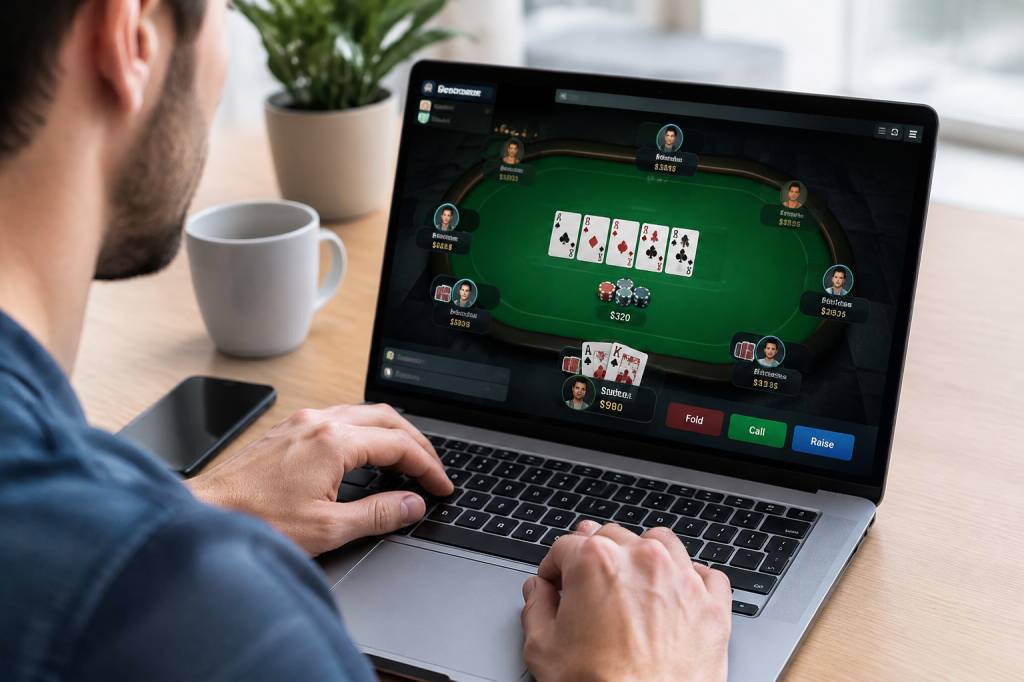
Online poker in the United States can be a thrilling way to learn the game, test your nerve, and enjoy a few hands from home. But before you chase a royal flush, there is one important question: is online poker legal where you live? The answer depends on your state, the operator, and the kind of game you want to play.
This beginner’s guide explains how to check the rules, choose a safer poker site, and get started without treating your first deposit like an all-in bet. Laws and platform availability can change, so use the information here as a starting point—not legal advice—and always verify the current rules in your state.
Is online poker legal in the United States?
There is no single nationwide answer. In the U.S., online poker is shaped by a mix of federal and state law. States can set their own rules for online gaming, which means a site that is licensed to offer poker in one state may be unavailable in another.
Some states have authorized regulated online poker, while others have not. A few states have agreements that allow players in participating jurisdictions to compete in shared player pools. These arrangements can make it easier to find a game, particularly at lower stakes, but they do not mean that every state is included.
The legal landscape can also change. A bill may pass, regulations may be updated, or a platform may adjust where it operates. So if a friend says, “I played there last year,” that is not quite the same as checking whether you can legally play there today.
Start with your state’s rules
Before creating an account, look for current information from your state’s gaming regulator or another official government source. Search for the state’s name alongside terms such as “online poker regulation” or “gaming commission.” If online poker is authorized, the regulator’s website may explain who can play, which operators are licensed, and what age requirements apply.
Licensed poker platforms generally use location checks to confirm that a player is physically inside an approved area. You may be able to register while visiting another state, but still be unable to play for real money unless you are physically located within the platform’s permitted jurisdiction. A VPN or other location-masking tool is not a clever shortcut: it can breach a site’s rules, jeopardize your funds, and create legal trouble.
When checking the rules, pay attention to these details:
-
Whether online poker for real money is authorized in your state.
-
The minimum age to play. It can vary by jurisdiction and platform, so never assume that one age rule applies everywhere.
-
Whether the operator is licensed to serve residents of your state.
-
Any restrictions on location, deposits, withdrawals, or account verification.
-
Where to find help with complaints or responsible-gambling support.
How to spot a legitimate poker site
A professional-looking website is not proof that a poker operator is trustworthy. Before signing up, check whether the platform is named on your state regulator’s official list of licensed operators. Follow links from the regulator where possible rather than relying on a search ad or a promotional post.
Once you have confirmed the license, take a few minutes to review the site itself. A legitimate operator should clearly explain its terms, payment methods, privacy practices, and account verification process. Customer support should be accessible, and the site should provide information about setting limits or taking a break.
Look for secure connections and clear payment information. Make sure you understand how deposits and withdrawals work, including processing times, possible fees, and identity checks. If the site promises guaranteed winnings, pressures you to deposit immediately, or offers a bonus with conditions it will not explain, step away. Poker already has enough surprises without adding mystery fine print.
Be cautious of apps or websites that claim to offer real-money poker in your state without any reference to local licensing. Also avoid sending money directly to strangers who say they will arrange access to a private game. A friendly avatar and a convincing story are not substitutes for consumer protections.
Setting up your account
On a regulated platform, you will usually need to provide personal details and verify your identity. Depending on the operator and local rules, this may include your name, address, date of birth, and information used to confirm your location. The process can feel less exciting than being dealt pocket aces, but it helps protect accounts and enforce age and location requirements.
Use a unique password that you do not use for email or banking. If the platform offers two-factor authentication, turn it on. Never share your password or verification codes with someone claiming to be customer support. Real support staff should not need you to hand over a one-time security code.
Read the terms before accepting a welcome offer. Bonuses may require a qualifying deposit, a certain amount of play, or other conditions before funds can be withdrawn. Check whether the offer applies to poker, whether it expires, and what counts toward any wagering requirement. A bonus is only useful if you understand the strings attached.
Choosing your first poker game
For many beginners, Texas Hold’em is the easiest place to start. Each player receives two private cards, and five community cards are dealt in stages. Your goal is to make the best five-card hand—or to persuade everyone else that you have one. That second skill is where poker’s famous drama lives.
Cash games and tournaments offer different experiences. In a cash game, chips generally represent a set monetary value, and you can usually leave between hands. A tournament has a buy-in and a structure; players compete until one remains or the event ends under its rules. Tournaments can be exciting, but a long run may take more time than expected.
Beginners may prefer low-stakes tables or free-play games while learning the interface and pace. Free play can help you understand how to place a bet, fold, or move between tables, although opponents may behave differently when no real money is involved. When you do try a real-money game, choose stakes you can comfortably afford to lose.
Basic habits that help new players
You do not need to memorize a shelf of strategy books before your first hand. A few simple habits can make the experience clearer and more enjoyable:
-
Learn the hand rankings before playing. A flush beats a straight, and a full house beats a flush—small details that can prevent a very memorable mistake.
-
Start at a low stake and play one table while you learn.
-
Pay attention to the action and your position. Acting later in a betting round can give you more information.
-
Fold when your hand is weak. Folding is not surrender; it is often the cheapest decision at the table.
-
Take breaks, especially after a frustrating hand. A bad beat is annoying, but it is not a reason to chase losses.
-
Set a budget before you play and stop when you reach it.
Imagine you buy into a low-stakes table with a fixed amount you are happy to spend on entertainment. You lose a close hand, then another. The temptation is to reload and win it back immediately. That is precisely when your plan matters most. If your budget is gone, log off. The next hand will still be there another day.
Deposits, withdrawals, and money management
Choose a payment method listed directly by the licensed operator and make sure the account belongs to you. Deposit only what you have set aside for entertainment, not money needed for rent, groceries, bills, or debt payments. Poker outcomes are uncertain, even when you make a sound decision.
Before depositing, check the minimum and maximum amounts, withdrawal rules, and any fees. Some platforms require you to verify your identity before processing a withdrawal. Complete verification through the official site or app, and contact support through its published channels if something is unclear.
Keeping a simple record of deposits, withdrawals, and time spent playing can help you stay aware of your habits. Many regulated sites also provide deposit, loss, or session limits. Consider setting these before you start, when it is easier to make a calm decision than it is after a long, emotional session.
Play safely and know when to pause
Online poker should remain entertainment, not a way to make rent or solve financial problems. No strategy can guarantee a profit, and a streak of good results does not remove the game’s risks. If you feel pressure to hide your play, borrow money, or keep going after you planned to stop, take a break and talk to someone you trust.
Regulated platforms may offer tools such as time reminders, cooling-off periods, deposit limits, and self-exclusion. Learn how to use them before you need them. In the United States, the National Council on Problem Gambling provides confidential support and information; you can call or text 1-800-MY-RESET or visit its website. Availability of local services and tools may vary.
Protect your personal information, too. Download apps from official sources, keep your device updated, and be wary of messages asking you to click a payment or account link. If an offer seems too good to be true—or a stranger promises a secret system that cannot lose—it is worth a second look.
A sensible first session
Before your first real-money hand, confirm that online poker is permitted where you are, check the operator’s license, and make sure you meet the applicable age requirements. Then choose a game you understand, set a small budget and time limit, and read the payment and bonus terms. If any part of the setup feels unclear, pause and ask the operator or regulator for information.
Approached carefully, online poker can offer the same mix of patience, psychology, and unexpected turns that makes the game compelling at a live table. Learn the rules, respect your limits, and keep the stakes comfortable. The best first win may simply be finishing your session exactly when you planned to.