
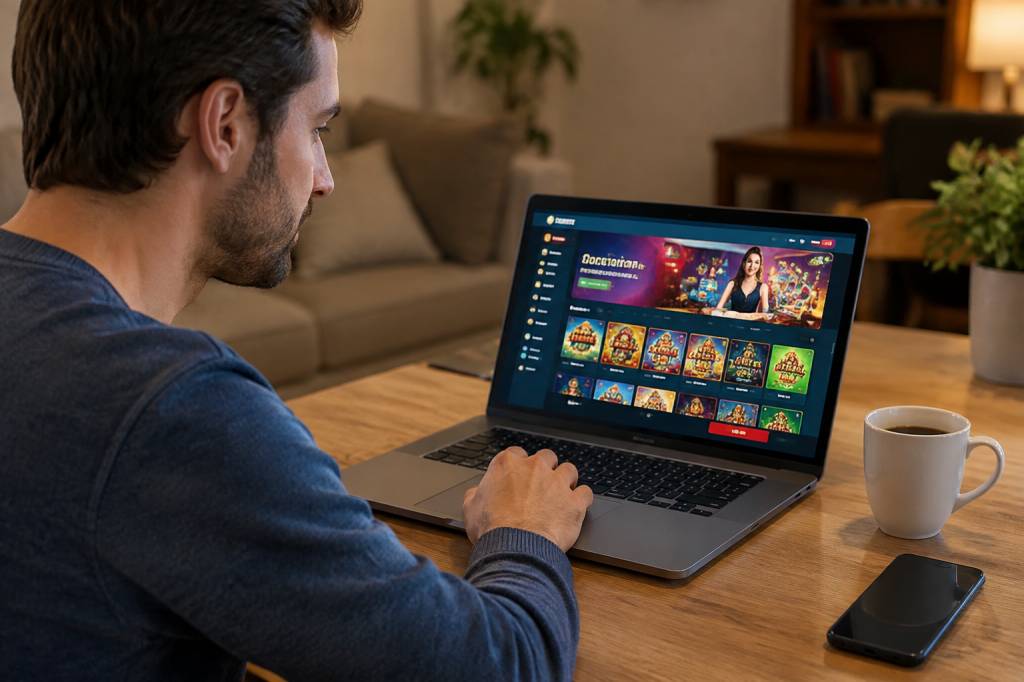
Choosing an online casino that pays real money is a little like choosing a poker table. The bright lights and generous promises may catch your eye, but the real question is what happens once the chips are on the table. Is the platform licensed? Are withdrawals processed fairly? Are the games tested? And, perhaps most importantly, can you play without feeling that the house rules were written in invisible ink?
With hundreds of gambling websites competing for attention, finding a safe and rewarding platform requires more than clicking the first “Welcome Bonus” banner you see. A reliable casino should combine strong security, transparent terms, fair games, practical payment options and responsible gambling tools. Here is how I personally assess an online casino before depositing real money.
Start with the licence and legal status
The first thing I check is whether the casino holds a valid gambling licence. A licence does not guarantee that every session will end with a winning spin—if it did, I would be writing this from a yacht—but it does show that the operator is subject to regulatory standards.
Reputable casinos usually display licensing information in the footer of their website. Look for the name of the regulatory authority, the licence number and the legal company operating the platform. Depending on the market, this may involve bodies such as the Malta Gaming Authority, the UK Gambling Commission, the Gibraltar Regulatory Authority or another recognised local regulator.
Do not stop at a logo. A polished website can display impressive badges that mean very little. Visit the regulator’s official website and check whether the licence details match the casino. The company name, licence status and authorised domain should all line up neatly. If the information is vague, outdated or impossible to verify, that is a strong reason to walk away.
Players should also confirm whether online gambling is legal in their country or region. A casino may accept international players but still be unavailable to residents of certain jurisdictions. Reading the eligibility rules before creating an account can prevent an unpleasant surprise later, especially when attempting a withdrawal.
Examine the casino’s reputation
A casino can have a licence and still provide a frustrating user experience. That is why reputation matters. I like to read independent reviews, player feedback and discussions about withdrawals rather than focusing only on promotional material.
Pay particular attention to repeated complaints. One unhappy player may simply have misunderstood a bonus condition. Twenty players describing delayed withdrawals, unresponsive support or sudden account restrictions suggest a different story. Patterns are more useful than isolated comments.
Search for information about:
- Withdrawal processing times
- Payment verification procedures
- Customer support responsiveness
- Bonus disputes and confusing terms
- Account closures or confiscated winnings
- Technical problems during games
It is also worth checking how long the operator has been active. Longevity is not an absolute guarantee, but an established casino with a consistent track record is generally less concerning than a brand-new website making enormous promises. In online gambling, a little history can be more valuable than a banner shouting “100,000x potential win.”
Look for strong security measures
When real money and personal documents are involved, security is not optional. Before registering, I check whether the website uses HTTPS encryption. The padlock icon in the browser is a basic requirement, not a special luxury.
A trustworthy casino should also explain how it protects personal and financial information. Look for a clear privacy policy, secure payment processing and sensible account protection features. Two-factor authentication is a particularly useful addition because it creates an extra barrier against unauthorised access.
Use a strong, unique password for your casino account. Reusing the same password you use for email or social media is an invitation to trouble. If the platform supports two-factor authentication, activate it immediately. A few extra seconds during login are a small price to pay for better protection.
Never send card details, passwords or verification documents through unofficial messaging accounts. Legitimate casinos may request identity documents through a secure account portal, but they should not ask you to share sensitive information in a random social media conversation.
Understand the verification process
Know Your Customer, commonly called KYC, is a standard part of regulated online gambling. The casino may ask for proof of identity, address and payment ownership. This can feel inconvenient, particularly when you are eager to withdraw a win, but it is designed to prevent fraud, money laundering and underage gambling.
The important question is not whether a casino performs verification. A serious operator should. The question is when and how clearly it explains the process.
Ideally, the casino should tell you what documents are required before you deposit. Some platforms verify customers during registration, while others do so before the first withdrawal. If you deposit a large amount without checking the KYC rules, you may later discover that an expired document or mismatched payment method delays your funds.
Make sure the name on your casino account matches the name on your payment method. Using somebody else’s card or e-wallet can create serious problems, even if the transaction appears to work at first. The safest approach is simple: use payment methods registered in your own name.
Compare payment methods and withdrawal terms
A casino may offer an impressive selection of games, but if withdrawing your winnings feels like negotiating a peace treaty, the experience quickly loses its shine. Before making a deposit, inspect the available payment options and the conditions attached to withdrawals.
Reliable platforms usually support several methods, such as bank cards, bank transfers, recognised e-wallets and sometimes local payment solutions. Check the minimum and maximum transaction limits, processing times and any applicable fees.
Deposits are often instant, while withdrawals may take longer because of security checks. That is normal. However, the casino should provide a realistic timeframe rather than hiding behind vague promises. A platform that clearly explains “withdrawals are reviewed within 24 hours and may take two to five business days through your chosen method” is far more reassuring than one that simply says “fast payouts.”
Before playing, I also check whether the casino requires withdrawals to be returned through the original deposit method. This is common practice. Understanding the rule early prevents confusion when you are ready to collect your winnings.
Read the bonus terms before accepting an offer
Bonuses can add value, but they are not free money floating gently through cyberspace. They come with terms, and those terms deserve the same attention as the headline offer.
Start with the wagering requirement. If you receive a £100 bonus with a 30x wagering requirement, you may need to wager £3,000 before the bonus or associated winnings become eligible for withdrawal. The exact calculation depends on the casino’s rules, and some games may contribute less than others.
Check the following details:
- The minimum deposit required
- The wagering requirement and how it is calculated
- The maximum bonus conversion or withdrawal amount
- The time limit for completing the offer
- Which games contribute to wagering
- Bet limits while the bonus is active
- Restrictions on combining promotions
- What happens if you withdraw before meeting the terms
Games such as slots often contribute 100% toward wagering, while blackjack, roulette and baccarat may contribute a smaller percentage or nothing at all. A player who accepts a casino bonus and immediately plays a high-value table game may discover that the wagering meter barely moves. That is not necessarily unfair if the terms were clearly displayed—but it is certainly something worth knowing beforehand.
I also prefer casinos that present bonus conditions in plain language. If the terms are written like a legal maze designed to make your eyebrows surrender, proceed carefully. Transparency is part of the value of an offer.
Check game fairness and software providers
A safe casino should work with recognised software providers and use independently tested random number generators. The random number generator, or RNG, determines the outcome of games such as slots, roulette and blackjack. Independent testing helps confirm that results are random and that the games operate according to their published specifications.
Look for familiar providers with established reputations, but do not assume that a famous logo automatically makes every casino trustworthy. The operator still needs to be properly licensed and transparent about its policies.
For slots, review the return to player percentage, commonly known as RTP. An RTP of 96%, for example, represents the theoretical long-term return across a very large number of plays. It does not mean that you will receive £96 back after spending £100 in one evening. Short-term results can vary wildly, which is why a winning streak should never be treated as proof that a machine is “due” to pay.
On table games, check the rules, house edge and available betting limits. A lower house edge may be attractive, but it does not remove risk. The casino still has an advantage, and the length of a session can change the results dramatically.
Test customer support before depositing
One of my favourite small tests is to contact customer support before depositing. Ask a straightforward question about withdrawal times, bonus wagering or verification. Then observe how the casino responds.
Good support should be accessible through live chat, email or another clearly listed channel. The response does not have to arrive before you finish your coffee, but it should be clear, polite and relevant. Copy-and-paste answers that ignore the question are not encouraging.
Check whether support is available 24/7 and whether the casino publishes a physical company address. A helpful support team cannot fix every issue instantly, but it should be able to explain the process and point you toward the right information.
Use responsible gambling tools from day one
A rewarding platform is not simply one that offers attractive games or fast withdrawals. It should also help players stay in control. Responsible gambling tools may include deposit limits, loss limits, session reminders, temporary time-outs and self-exclusion options.
Set a budget before you play and treat it as entertainment spending, not as an investment plan. Never use money needed for rent, bills, food or debt repayments. Avoid increasing your stake to chase a loss. That familiar thought—“one more spin and I’ll get it back”—has emptied more bankrolls than any villain at a poker table.
Session reminders are particularly useful because online games move quickly. A few rounds can become an hour before you notice. Decide in advance how long you will play and how much you are willing to lose. If the casino does not make these limits easy to set, that is a weakness worth considering.
Players who feel gambling is becoming difficult to control should pause immediately and seek support from a recognised gambling help service in their country. Asking for help is not a failure; it is a smart defensive move, much like folding a weak hand before it becomes an expensive one.
Make a small test deposit and withdrawal
Even after researching a casino, I prefer to begin with a modest deposit. This allows me to test the platform, payment process, support quality and withdrawal system without exposing a large amount of money.
Play within the limits of that initial amount, then request a small withdrawal if possible. Observe how long the process takes, whether additional verification is requested and whether the casino communicates clearly. A small test can reveal more than a homepage full of awards and animated fireworks.
Keep records of deposits, withdrawals, promotional terms and important conversations with support. Screenshots can be useful if a dispute arises. Also review your bank or e-wallet statements regularly so that every transaction is familiar.
Red flags I never ignore
Some warning signs are difficult to overlook. I would avoid a casino that:
- Has no verifiable licence or legal company information
- Promises guaranteed winnings or risk-free profit
- Uses aggressive pressure to make you deposit immediately
- Hides bonus terms or changes them without clear notice
- Accepts deposits but provides no realistic withdrawal information
- Requires unusual fees to release winnings
- Refuses to explain its verification procedures
- Has a large number of unresolved complaints about unpaid balances
- Offers support only through unofficial social media accounts
Another warning sign is a casino that keeps offering larger bonuses whenever you try to leave. A promotion should be optional, not a persuasive speech from a virtual salesman who refuses to take a hint.
Choose value, not just the biggest bonus
The safest and most rewarding casino is rarely the one with the loudest promotion. Real value comes from the full experience: fair terms, reliable withdrawals, quality games, strong security, helpful support and tools that encourage sensible play.
Before joining, compare several platforms and write down the details that matter to you. Perhaps you prioritise fast e-wallet withdrawals, live dealer games, low minimum deposits or a specific sports betting section. Your ideal casino should fit your habits rather than pushing you toward offers that do not suit your playing style.
Ultimately, choosing an online casino that pays real money requires a little patience before the first spin or deal. Verify the licence, read the terms, test the payments, protect your account and set firm limits. The thrill should come from the game itself—not from wondering whether your winnings will ever make it back to your bank account.