


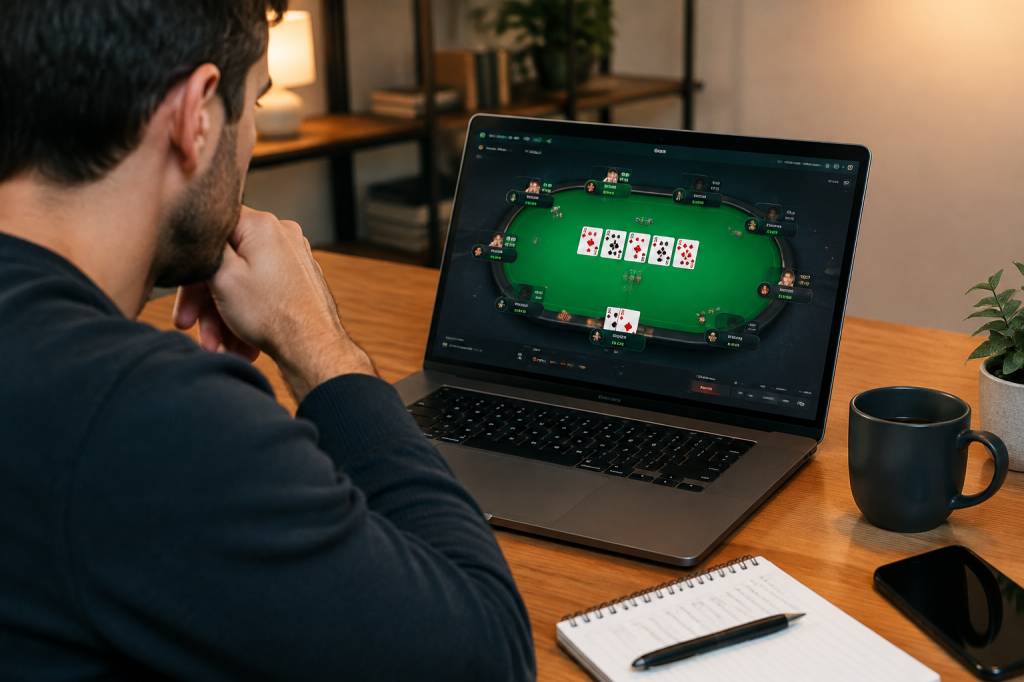
Choosing an online poker casino is a little like choosing a table in a busy card room. The cards matter, of course, but so do the players, the rules, the atmosphere, and whether the person running the game can be trusted. A generous welcome offer may catch your eye; it should not make the decision for you. I look at the whole experience before I deposit a cent.
My checklist is built for both newcomers and regulars: legality, security, game quality, traffic, payments, and the small details that make a long session enjoyable—or unbearable. Here is how I separate a promising poker room from one that is all shiny lobby and no substance.
I Check Whether the Room Is Properly Licensed
Before I look at tables or tournaments, I check who regulates the site. A legitimate operator should clearly identify its licensing authority and company details, usually in the footer or in a dedicated section of its website. I then verify those details with the regulator where possible. A logo alone is not proof; anyone can put a badge on a page.
Licensing requirements differ by country and region, so a site that is available to one player may not be available to another. I check that online gambling is legal where I live and that the operator accepts players from my jurisdiction. If the terms are vague about location, or the company is difficult to identify, I move on. There are plenty of poker tables that do not require a leap of faith.
I also look for clear rules covering account verification, withdrawals, bonuses, and disputes. A trustworthy room explains what documents it may request and how players can raise a complaint. If the rules are hidden behind confusing wording, that is not a clever bluff. It is a warning sign.
I Treat Security as Part of the Game
When I create an account, I want to know that my personal and payment information is being handled responsibly. I check that the website uses a secure connection and look for a privacy policy that explains what information is collected, why it is needed, and how it is protected. I use a unique password, and I enable two-factor authentication if the site offers it.
Next, I look into the poker software itself. Reputable operators generally explain how their games work and what measures they use to protect fair play. Depending on the room, that may include independent testing, monitoring for suspicious behavior, or tools intended to detect prohibited software and collusion. No system can promise that every hand will feel fair—sometimes a river card arrives with the timing of a practical joke—but the operator should be transparent about its safeguards.
I read the site’s rules on bots, real-time assistance, account sharing, and multi-accounting. These policies matter to everyone at the table. If the room does not clearly prohibit cheating or explain how it handles suspected violations, I am not eager to buy in.
I Look at the Games, Not Just the Lobby
A poker room can advertise hundreds of tables, but that number means little if none of them match the way I like to play. I check the available formats: Texas Hold’em, Omaha, cash games, sit-and-go tournaments, multi-table events, and any low-stakes or beginner-friendly tables. A good selection gives me room to change gears without changing sites.
Then I inspect the stakes. Are there tables that suit my budget? Are the limits clearly displayed before I join? Can I find a game without feeling pressured to sit higher than I intended? The best room for me is not necessarily the one with the biggest pots. It is the one where I can choose a sensible buy-in and play at a pace that feels comfortable.
I pay attention to the lobby filters, too. Useful filters let me sort by game, stake, table size, and tournament type. That might sound like a small convenience, but it makes a difference when I am trying to find a particular game rather than scroll through a digital maze. A clean lobby is the online equivalent of a dealer who keeps the cards moving.
I Check How Busy the Tables Really Are
Traffic determines whether a poker room feels alive. I look at how many players are online at different times of day and whether the formats I enjoy have active tables. A room might be busy during evening hours but quiet in the morning, so I try to match its busiest periods to my own schedule.
For tournaments, I check the schedule, starting times, entry fees, and prize structures. I want to know whether events run regularly and whether the buy-ins fit my budget. If a tournament page promises a large prize pool, I look for the details behind the headline: guaranteed amount, registration period, and what happens if the guarantee is not met. The fine print is rarely as exciting as the final table, but it is worth reading before the first hand.
I also consider the player pool. A newcomer may prefer beginner tables, low-stakes games, or formats with a slower pace. Experienced players may care more about game variety and tournament depth. There is no universal “best” room; the right choice depends on who you are and what you want from a session.
I Compare Payments and Withdrawal Rules
Depositing is only half the story. Before I play, I check which payment methods are available in my country, the minimum and maximum transaction amounts, and whether there are fees. I also look at the expected processing times for withdrawals. If the site accepts deposits instantly but gives no clear information about cashing out, I take note.
Most regulated poker rooms require identity checks, especially before a first withdrawal. That can be routine, but it is better to understand the process in advance. I check which documents may be needed, whether the name on the payment account must match the poker account, and whether verification can delay a payout.
Here is the quick payment checklist I use:
- Are the available deposit and withdrawal methods clearly listed?
- Are transaction limits and any fees easy to find?
- Does the operator explain typical withdrawal processing times?
- Are verification requirements described before I request a payout?
- Can I use a payment method that is legal and practical where I live?
I never deposit more than I can afford to lose, and I do not treat a poker balance as a savings account. That is not a strategy; it is just good housekeeping.
I Read Bonus Terms Before I Get Excited
Welcome offers can be useful, but the headline number rarely tells the whole story. I read the terms to see how the bonus is released, which games count toward progress, whether there is a deadline, and whether a qualifying deposit is required. Poker promotions may depend on generating rake or completing specific tasks, so I check what I would actually need to do to receive the advertised benefit.
I also look for restrictions on withdrawals while a bonus is active. Some offers may be forfeited if I cash out early; others may have limits or eligibility rules. If the conditions are difficult to understand, I contact customer support before opting in. A bonus should add a little value to a session, not turn it into a part-time job with a spreadsheet.
Most importantly, I choose a room I would still consider without the promotion. Bonuses change. The quality of the games, the security, and the withdrawal experience matter long after the welcome banner disappears.
I Test the Software and Mobile Experience
Even a well-run room can be frustrating if the software is clunky. I try the desktop client or browser version, then check the mobile app if I expect to play on a phone or tablet. I want the cards and betting controls to be easy to read, the tables to load reliably, and the lobby to remain usable on a smaller screen.
I pay attention to practical features: customizable table layouts, clear bet sizing, hand histories, tournament information, and settings that let me control notifications. I also check whether the app is available through an official store or directly from the operator’s verified website. I avoid downloading files from third-party pages I cannot confirm.
Connection drops happen, but the room should explain what happens if a player disconnects during a hand or tournament. I look for its disconnection policy and any reconnection options. When the Wi-Fi decides to fold before I do, it is reassuring to know the rules in advance.
I Try Customer Support Before I Need It
Support quality is easiest to appreciate before there is a problem. I check whether help is available by live chat, email, or another channel, and whether the service hours are stated. Then I ask a simple question about a payment method, game rule, or bonus condition. The response tells me a lot: Was it timely? Did it answer the question? Did it sound like a person understood the issue?
I also browse the help center for clear explanations of account security, responsible gambling tools, verification, and dispute handling. A thoughtful FAQ is a good sign. So is a support team willing to explain a policy without nudging me to deposit more.
I Look for Useful Responsible Gambling Tools
Poker should fit around life, not take it over. I look for tools that let me set deposit, loss, or session limits, take a time-out, or request self-exclusion. I check how these tools work and whether the limits can be increased immediately or only after a cooling-off period. Clear controls make it easier to stick to boundaries I set while I am thinking calmly, rather than in the middle of a heated session.
I set a budget before I play and treat it as entertainment spending. If I find myself chasing losses, playing longer than planned, or borrowing to keep going, I stop and seek support. Gambling should never be used as a way to make money quickly or solve financial problems. If it stops feeling manageable, local gambling support services can offer confidential help.
My Final Shortlist
When I compare online poker casinos, I score each one on the things that matter most to me: licensing, security, game selection, player traffic, payments, software, support, and responsible gambling features. I do not let one impressive promotion make up for weak answers elsewhere. A reliable room should be able to explain how it operates without making me work like a detective.
My last test is simple: would I be comfortable recommending this site to a friend who is new to online poker? If the terms are clear, the games suit their budget, support is easy to reach, and the operator takes safety seriously, it earns a place on my shortlist. If something feels off, I fold. There will always be another table—and unlike a bad beat, walking away is a move you can make on purpose.