


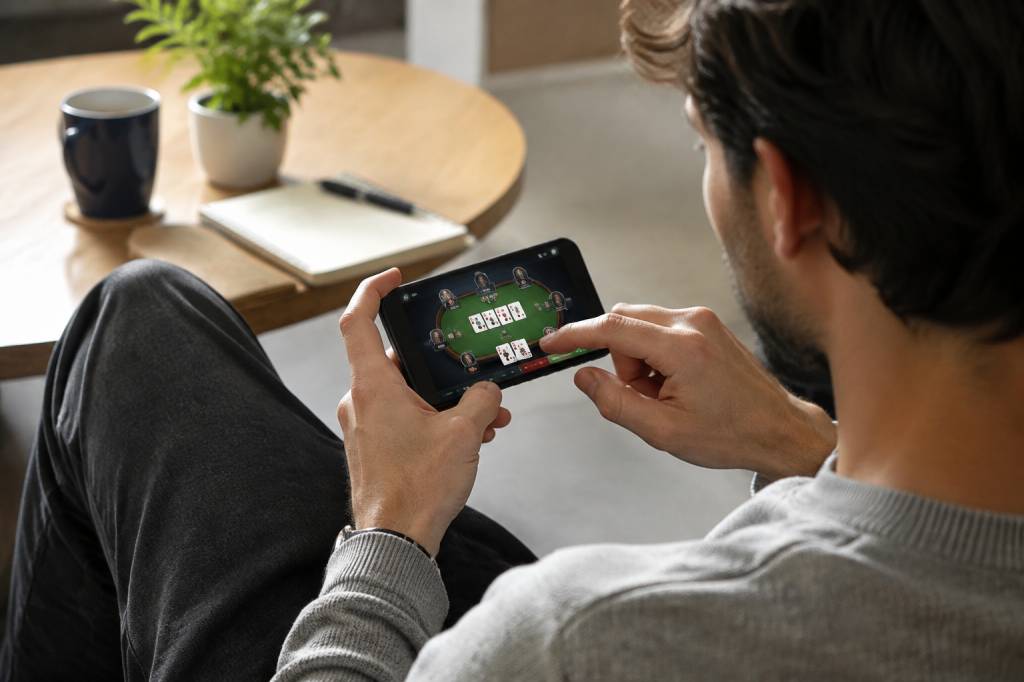
Choosing an online poker app for real-money games is a little like choosing a seat at the table. The cards matter, of course, but so do the players, the rules, and whether you trust the person dealing. A slick interface can catch your eye; it should not be the reason you deposit money.
When I compare poker apps, I look beyond flashy banners and promises of big wins. I want to know whether the operator is licensed where I live, whether the games are fair, how easily I can understand the costs, and whether the app makes it simple to set limits. Here is the checklist I use before I play a hand for real.
Start with legality and licensing
Before downloading anything, check whether real-money online poker is legal in your jurisdiction and whether the app is authorized to offer it there. Rules differ by country and sometimes by state or province. An app that is available in one place may be restricted in another, so do not assume that a listing in an app store means it is legally available to you.
Look for the operator’s licensing information on its website or in the app. A legitimate service should clearly identify the company running the games and name the relevant regulator. You can then check those details with the regulator itself. If the operator hides its identity, gives vague licensing claims, or makes you work harder to find basic information than to find a deposit button, that is a warning sign.
Age requirements matter too. Real-money poker is for adults who meet the legal age in their location. A reputable operator will verify age and identity, both to comply with regulations and to help protect players. Verification can feel like an administrative speed bump, but it is preferable to an account that treats identity checks as optional.
Check how the games are protected
Trust is not a decorative feature. Before I consider depositing, I want to know how the app protects personal and financial information and how it demonstrates that games are operated fairly. Look for clear explanations of security measures, independent testing, and the operator’s process for handling complaints or disputed hands.
For online poker, fairness also means understanding the game environment. Are you playing against other people, against automated opponents, or in a format that mixes both? The app should explain its rules and formats in plain language. If a description is confusing, ask customer support before playing. Mystery is part of poker; mystery about who or what is across the virtual table is not.
Take a moment to review the app’s privacy policy and account-security options. Strong passwords and two-factor authentication, when available, are sensible protections. Avoid logging in on shared devices, and do not share your account details with anyone, even if they claim they can help you win. That last offer is often less “poker coach” and more “fold immediately.”
Make sure the app fits your device and playing style
A poker app can be safe and still be a poor fit. I test the basics before putting money in: does it run smoothly on my device, are the buttons easy to read, and can I review a hand without accidentally calling a raise? A tiny button placed next to a much larger one is not a thrilling design choice when real money is involved.
Think about how you like to play. If you enjoy short sessions, quick formats may suit you. If you prefer to study opponents and take your time, standard cash games or tournaments may be a better match. Check whether the app offers the poker variants you actually enjoy, such as Texas Hold’em or Omaha, and whether it provides beginner-friendly tables or play-money games for practice.
I also pay attention to stability. A brief connection problem can be annoying in any game; during a hand, it can be costly. Read recent reviews for recurring reports of crashes, freezing, or difficult reconnection. One frustrated review is not proof of a bad app—some players blame the software for a river card that simply had other plans—but repeated, specific complaints deserve attention.
Understand deposits, withdrawals, and fees
Payment details should be clear before you deposit. Check which payment methods are supported, whether there are minimum and maximum amounts, and whether the operator charges transaction or currency-conversion fees. A deposit that takes seconds and a withdrawal that takes weeks is not the smooth experience most players are hoping for.
Read the withdrawal rules carefully. Operators may require identity verification before releasing funds, and different payment methods can have different processing times. Find out whether withdrawals must go back to the method used for deposits, what documents may be requested, and how to contact support if a payment is delayed. If those terms are buried or vague, pause before funding the account.
Bonuses deserve the same scrutiny. A welcome offer may sound generous, but it can come with wagering requirements, expiry dates, game restrictions, or other conditions. Read the terms and calculate what you would need to do before expecting to withdraw bonus-related funds. If the offer is difficult to explain in one breath, it probably deserves more than a quick tap on “claim.”
Compare games, stakes, and player traffic
An app is only useful if it has games you can play at stakes that make sense for your budget. Browse the lobby at different times of day and check whether the tables and tournaments you want are actually running. A crowded lobby can offer plenty of choice, but the biggest pool is not automatically the best fit. A quiet, low-stakes table may be more comfortable than a high-pressure game full of unfamiliar formats.
Look at the buy-ins, blinds, tournament schedules, and any fees charged for entering games. In cash games, the operator typically takes a rake; in tournaments, there may be an entry fee in addition to the prize-pool contribution. These costs affect the long-term value of playing, even if they are easy to overlook in the excitement of a new app.
For example, if I am testing an unfamiliar platform, I would rather begin at a low-stakes table than jump into a tournament with a buy-in that I would miss later. That is not cowardice. It is a sensible way to learn the layout, pacing, and rules without turning a software trial into an expensive lesson.
Look for useful support, not just a chat icon
Good customer support should be easy to find and capable of answering practical questions. Check which contact options are available, when support is staffed, and whether the app has a useful help center. If possible, ask a straightforward question before depositing—for instance, how long withdrawals usually take or how to set a deposit limit.
Pay attention to the answer. A clear, specific response is reassuring. A copied paragraph that avoids the question is not. Support matters most when something goes wrong, such as a payment delay or an account-access issue, so it is worth checking before you need it in a hurry.
It is also helpful to understand the operator’s complaints process. Find out how to raise a formal complaint and whether an independent dispute-resolution service is available in your jurisdiction. Keep records of relevant messages and transactions. A little organization can save a lot of frustration if you ever need to explain what happened.
Check the responsible-play tools
Real-money poker should be entertainment, not a plan for paying bills or recovering losses. Before signing up, see whether the app offers deposit, spending, or session limits; time reminders; cooling-off periods; and self-exclusion. These tools should be easy to locate and use. Responsible-play controls hidden behind a maze of menus are not much help when you want to act quickly.
Set a budget before you play and treat it as the cost of entertainment. Do not borrow to play, chase losses, or raise your stakes because you feel due for a win. Poker involves decisions, but it also involves variance. A well-played hand can lose, and a lucky hand can win; neither result guarantees what happens next.
If you find yourself playing longer or spending more than intended, take a break and use the available limits or exclusion tools. If gambling is causing harm, consider contacting a local support service. A good app can provide safeguards, but it cannot make decisions for you at the table.
Use reviews carefully and test before depositing
App-store ratings can help you spot patterns, but they are not the whole story. Read recent reviews that describe specific problems, such as withdrawal delays, repeated crashes, or unresponsive support. Be cautious about glowing reviews that sound identical or make unrealistic claims about guaranteed profits. There is no app that can turn poker into a sure thing, unless it has discovered how to negotiate with the cards.
Where available, try the free-play version first. It lets you learn the controls and explore the lobby without risking money. Free play cannot tell you everything about real-money withdrawals or support, but it can reveal whether the app is comfortable to use and whether the games match your expectations.
Then, if you decide to proceed, start with a modest amount you can afford to lose. Verify your account, review the payment terms, set limits, and make a small test withdrawal when appropriate. That may sound less exciting than jumping straight into a high-stakes tournament. It is also a much better way to find out whether the app works for you.
My quick poker-app checklist
Before I choose an app for real-money games, I ask myself a few simple questions:
-
Is real-money poker legal where I live, and is the operator properly licensed?
-
Are the rules, security measures, and fairness information easy to understand?
-
Does the app run reliably on my device and offer the games and stakes I want?
-
Are deposits, withdrawals, fees, and bonus conditions explained clearly?
-
Can I reach helpful customer support and find a complaints process?
-
Are spending limits, time reminders, cooling-off, and self-exclusion tools available?
The best poker app is not necessarily the one with the loudest promotion or the fanciest graphics. It is the one that is legal for you to use, transparent about money, reliable at the table, and equipped to help you stay in control. Choose carefully, keep your stakes sensible, and remember: the smartest move is sometimes the one you make before the first card is dealt.